The Story of the Birth of Jesus from Beginning to End

Jesus Birth A to Z

Last January, I was with our Women in the Middle study group studying the story of Simeon and Anna from Luke 2.  As we worked our way through the story, it began to occur to our women that, although this was a story that continued the story of Jesus’ birth, it was not at all a story with which they were familiar.  In fact, many of them never remembered reading this story at all.  It got them wondering why.  Why do we know the story of the shepherds and the angels and the wise men, but almost nothing about Zechariah, or Simeon and Anna, or the boys in Bethlehem?  The truth is, we do hear many of these stories, but only once every three years, and almost never in chronological order.  As I explained this to our women, they came up with an amazingly simple idea.  What if, during the seasons of Advent, Christmas, and the beginning of Epiphany, we read through the entire story of the birth of Jesus from beginning to end?  And what if we committed to doing it for several years, until Zechariah and Simeon and Anna and the boys in Bethlehem were as familiar a part of Jesus’ origin story as all the rest?  This past fall, I brought this “crazy” idea to our Tri-Saints Worship and Music Committee, and they agreed to give it a try.  And #jesusbirthatoz was born.  As I started to really get into the story, I realized that the perfect introduction would be Mary’s Song in Luke 1.  It’s not chronological (sorry!) but it fit in well to the themes of Christ the King Sunday while also providing a transition into Advent.

We will experience #jesusbirthatoz together in several ways.  First, they will be our guiding texts for Sunday worship.  Together, we will dive deeply into this story, both the familiar friends and the new (to us) acquaintances.  After this introduction, we will be invited to delve deeply into the story over the course of the week with a daily flipbook devotion.  You may get a paper copy at church week by week to decorate, color, and generally make your own.  If paper is not your speed, you can find it one week at a time at Good God Ideas (https://goodgodideas.wordpress.com/category/jesusbirthatoz/), or daily on Instagram and Facebook.  This resource is written for confirmation-level youth, but adults and children should also find daily inspiration and invitation into the story.   Our monthly Dwelling in the Word Bible Studies will also follow the story, taking this more lengthy opportunity to familiarize ourselves with the more unfamiliar aspects of the story.  I am so looking forward to introducing and reintroducing this, most sacred story to our community of faith!  Join me, as together we journey through Jesus’ birth story from A to Z!

In Christ,

Pastor Breen

p.s. If you would like to see what the weekly Bible readings will be in advance, you can find the whole season here: Advent to Epiphany Lectionary 17 18
Reformation 500 Resources: The Fifth Petition of the Lord’s Prayer for Adults

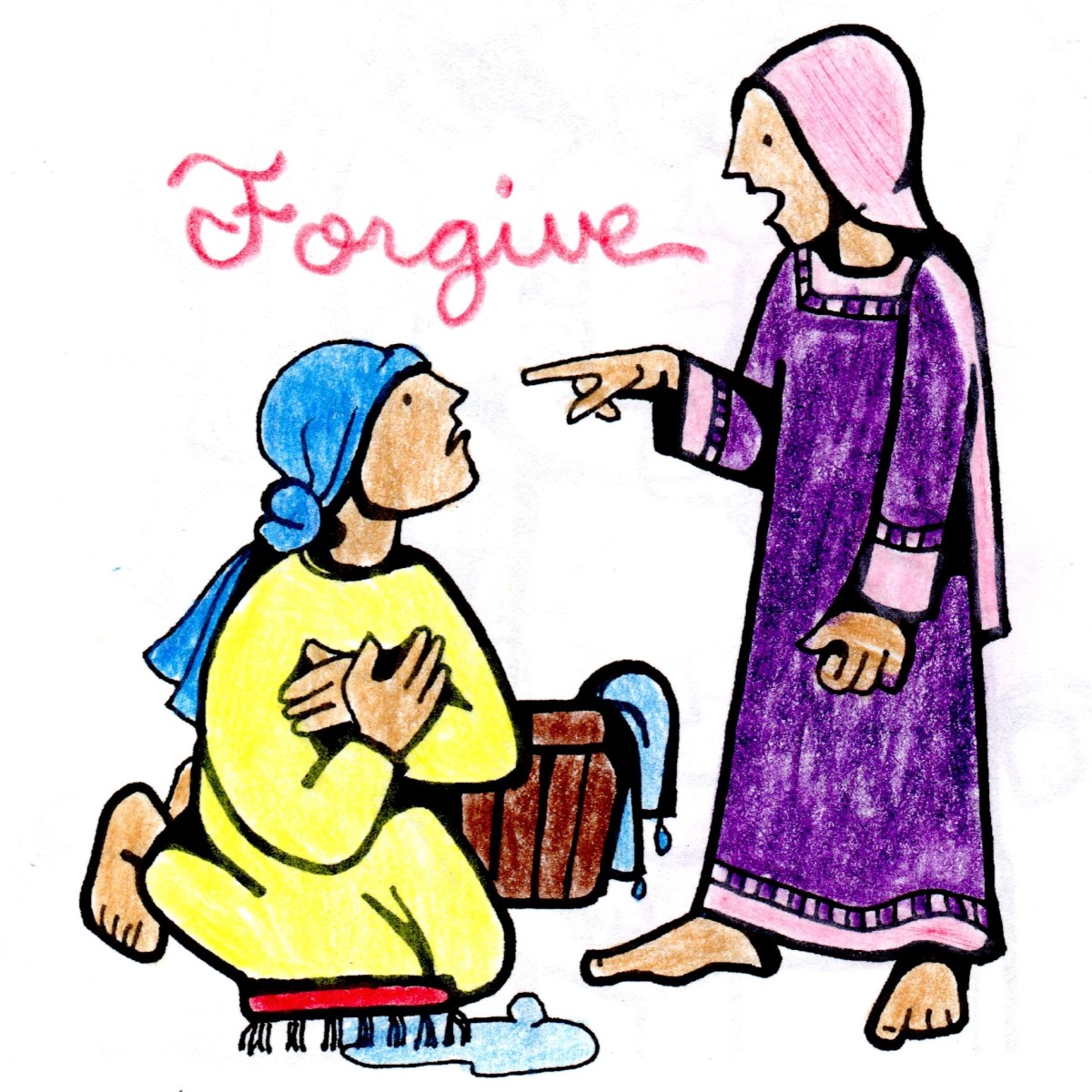
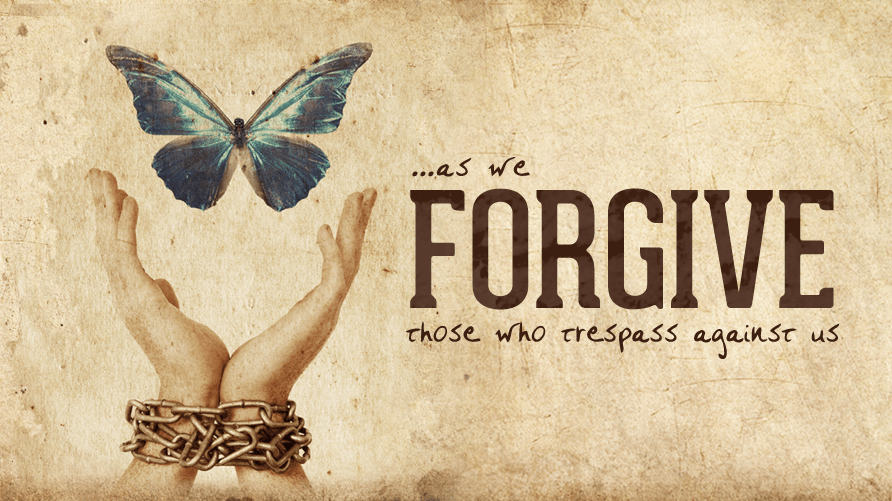
forgive

In honor of the 500th Anniversary of the Reformation this October, we will be studying the three major parts of the Catechism for the fall months.  All children and youth will receive their own copy of Luther’s Small Catechism:  Study Edition, and adults may purchase them for themselves through the church.  May God bless our time of study as we return to our Lutheran roots during this Pentecost fall season of growth!

The Fifth Petition of the Lord’s Prayer
Forgive us our trespasses
​as we forgive those who trespass against us.

What is this?  or  What does this mean?
We ask in this prayer that our heavenly Father would not regard our sins nor deny these petitions on their account, for we are worthy of nothing for which we ask, nor have we earned it. Instead we ask that God would give us all things by grace, for we daily sin much and indeed deserve only punishment. So, on the other hand, we, too, truly want to forgive heartily and to do good gladly to those who sin against us.  (Luther’s Small Catechism: Study Edition pg. 39)

Devotional Questions from the ELCA’s Book of Faith Initiative:
What scares, confuses, or challenges me about this petition and its meaning?  What do I have questions about?  It is the second part of this petition that challenges me.  We ask for forgiveness, contingent on our ability to forgive others?  This seems like a recipe for disaster.  In “The Freedom of a Christian,” Martin Luther describes faithful Christian people as those “prepared for willing service to the neighbor, which takes no account of gratitude or ingratitude, praise or blame, profit or loss” (page 524).  In other words, when we are acting from Christ’s point of view, we are free to do good to others, to forgive, to be scandalously generous to all people whether they deserve it or not.  Forgiven people are forgiving people, and this is a challenge as I strive to live into my Christian identity here on earth, as a sinner among sinful people.

What delights me about this petition and its meaning?  What do I like about it?  What is the good news here?  The word of forgiveness here is truly mind blowing to me.  Have you ever been forgiven of something major?  You might have a taste of what full, true, complete forgiveness feels like.  The fact that God loves me so much that I continue to be forgiven, day after day, week after week, year after year (not to mention hour after hour), is some of the best news that I have ever heard.  And yet, I continue to need to hear it.  Over and over again.  Like a broken record that I never get tired of hearing:  I forgive you.  I forgive you.  I forgive you.

What stories or memories does this petition and its meaning stir up in me?  You might remember a time when you felt truly forgiven, or were able to reach out in forgiveness toward someone else, for example.
At this point in my life, I am the mother of three young children.  They are, for me, the greatest examples of giving and receiving forgiveness.  When I mess up and ask for their forgiveness, there is nothing sweeter in this world than have them leap into my arms and cover me with kisses.  I am washed clean by their sticky enthusiasm and willingness to forgive and forget.  As I struggle with forgiveness in other relationships, I look to the example of my children to lead the way.

What is God up to in this petition and its meaning?  What is God calling you to do or to be because of this?  In this petition, we are acknowledging the position of God and others in our lives.  God gives us undeserved forgiveness and empowers us to reach out in forgiveness to all of the other forgiven sinners that we are in relationship with (that is, all of them).  In this prayer, we accept it as our Christian mission to be agents of forgiveness, just as we have first been forgiven.

This is our last month of our Reformation 500 celebration, and I am looking forward to delving even more deeply into the Small Catechism with you as the weeks draw to a close.  Thanking you for continuing to walk with me as we seek out God’s mission for us, here and now and in this place.

In Christ,
Pastor Breen

Reformation 500 Resources: The Fifth Petition of the Lord’s Prayer for Youth

LP005.jpg

What does this mean?
Look up the petition and its meaning in your Study Edition of Luther’s Small Catechism, page 39.

Don’t have one?  You can get your own copy here:  https://www.augsburgfortress.org/store/product/22231/Luther-Small-Catechism-Anniversary-Study-Edition

Or download the free app here:  https://www.augsburgfortress.org/store/product/22879/Luther-Small-Catechism-App

Questions to Ponder:

Underline or circle any words or phrases that you don’t understand.  Write the words and their definitions in the margins of your catechism.

What questions do you have about this section?

What is your favorite part of this section?  Why?

For what do you need to ask God for forgiveness?  (You make black out this answer once you have written it, if you wish)

Who do you need to forgive in your life?  How will you go about doing this?

What is God up to in this section?

Teach Us to Pray:
You can Pray in Color with the illustration on pg. 39 of your Small Catechism.
You may also conclude your study by praying the Lord’s Prayer with motions:

Reformation 500 Resources: The Third Article of the Creed for Adults

4fc9445fe917dfc3e5e21b45fe44f92b--city-museum-martin-luther

In honor of the 500th Anniversary of the Reformation this October, we will be studying the three major parts of the Catechism for the fall months.  All children and youth will receive their own copy of Luther’s Small Catechism:  Study Edition, and adults may purchase them for themselves through the church.  May God bless our time of study as we return to our Lutheran roots during this Pentecost fall season of growth!

The Third Article of the Apostles’ Creed: On Being Made Holy

I believe in the Holy Spirit, the holy catholic church, the communion of saints, the forgiveness of sins, the resurrection of the body, and the life everlasting.

What is this?  or  What does this mean?

I believe that by my own understanding or strength I cannot believe in Jesus Christ my Lord or come to him, but instead the Holy Spirit has called me through the gospel, enlightened me with his gifts, made me holy and kept me in the true faith, just as he calls, gathers, enlightens, and makes holy the whole Christian church on earth and keeps it with Jesus Christ in the one common, true faith. Daily in this Christian church the Holy Spirit abundantly forgives all sins—mine and those of all believers. On the last day the Holy Spirit will raise me and all the dead and will give to me and all believers in Christ eternal life. This is most certainly true.  (Luther’s Small Catechism: Study Edition pg. 31)

Devotional Questions from the ELCA’s Book of Faith Initiative:

What scares, confuses, or challenges me about this article and its meaning?  What do I have questions about?

One aspect about this article and its meaning that challenges me is that I cannot believe on my own.  There is nothing that I can do that makes me more believing, or more faithful, or more holy in God’s eyes.  That’s the work of the Spirit.  I would love to think that all my hard work at being good gets me somewhere, but it just doesn’t.  It is God’s work in and through me, and not mine at all.  Another part that challenges me is when I am in grumpy mode.  I am happy to believe that the Holy Spirit abundantly forgives me, but all believers?  Even the ones who I don’t like, who don’t seem to care about the world, that I don’t know?  Even them?  It’s a good thing that God is the one doing the forgiving; I wouldn’t be very good at that job at all.

What delights me about this article and its meaning?  What do I like about it?

I always think that Sunday morning is a miracle.  All these different people, from all these different homes and families and work places, gathered all together to sing, and pray, and learn, and grow.  Only the Spirit could bring that to pass, and I thank God every Sunday for the great privilege to lead our assembly.  I am also reminded that worship on Sunday morning isn’t the only place we gather.  This month, we will gather for service projects on Mission Festival Sunday.  We will continue to learn and grow together through Sunday School and Bible Study.  And we will serve in the various capacities that God has given us, as farmers and electricians, mothers and fathers, teachers and students.  And the Holy Spirit will go there with us, too.

What stories or memories does this article and its meaning stir up in me?  You might remember a time when you felt called, gathered, enlightened, made holy, or sent, for example.

I am looking forward to the Nebraska Synod’s gathering of Rostered Leaders in Lincoln this month.  We will be altogether in one place for the celebration of the 500th anniversary of the Reformation.  It is an event that I imagine that I will be telling future generations about for as long as I live, and I can’t wait to be a part of it.

What is God up to in this article and its meaning?  What is God calling you to do or to be because of this?

This is my favorite article of the Apostles’ Creed because it tells us all the ways and places in which God has promised to show up.  It is sometimes hard to believe, simply because we cannot see.  However, when we look to “the holy catholic church, the communion of saints, the forgiveness of sins,” we find concrete places where we can be sure to encounter God.  That is a great source of comfort and hope for me, especially in a world that is often neither comforting nor hopeful.

As always, I look forward to great conversations with you about this article, and whatever else the Spirit puts on your heart, this month.  May the Spirit accompany us into all of the places where we have been sent to share God’s love.

In Christ,

Pastor Breen

Reformation 500 Resources: The Third Article of the Creed for Youth

AC003

What does this mean?
Look up the commandment and its meaning in your Study Edition of Luther’s Small Catechism, page 31.

Don’t have one?  You can get your own copy here:  https://www.augsburgfortress.org/store/product/22231/Luther-Small-Catechism-Anniversary-Study-Edition

Or download the free app here:  https://www.augsburgfortress.org/store/product/22879/Luther-Small-Catechism-App

Questions to Ponder:
Underline or circle any words or phrases that you don’t understand.  Write the words and their definitions in the margins of your book.

What questions do you have about this section?

What is your favorite part of this section?  Why?

What do you think of when you think of God as “Holy Spirit”?

How is thinking of God as the Holy Spirit helpful in your daily life?

What is God up to in this section?

Teach Us to Pray:
You can Pray in Color with the illustration on pg. 30 of your Small Catechism.
You may also conclude your study in these or similar words:
Holy Spirit, Giver of Life, stir up in me the gift of your Holy Spirit: the spirit of wisdom and understanding, the spirit of counsel and might, the spirit of the knowledge and the fear of the Lord, the spirit of joy in your presence, both now and forever.  In Jesus’ name I pray, Amen. (Luther’s Small Catechism:  Study Edition pg. 78)

Reformation 500 Resources: The 7th Commandment for Adults

Luther Ref500

In honor of the 500th Anniversary of the Reformation this October, we will be studying the three major parts of the Catechism for the next three months.  All children and youth will receive their own copy of Luther’s Small Catechism:  Study Edition, and adults may purchase them for themselves through the church.  May God bless our time of study as we return to our Lutheran roots during this Pentecost fall season of growth!

The Seventh Commandment:  You shall not steal.

What does this mean?

We are to fear and love God, so that we neither take our neighbors’ money or property nor acquire them by using shoddy merchandise or crooked deals, but instead help them to improve and protect their property and income. (Luther’s Small Catechism:  Study Edition pg. 21)

Devotional Questions from the ELCA’s Book of Faith Initiative:

What scares, confuses, or challenges me about this commandment and its meaning?  What do I have questions about?

This is a tough commandment for most of us, because most of us have never outright stolen much of anything at all.  We think, therefore, that the commandment doesn’t apply to us.  However, Martin Luther, as he always does so well, refuses to let us wiggle out from under this commandment by intensifying it to the point that “all have sinned and fall short of the glory of God” (Romans 3:23).  Have you ever bought the cheapest thing simply because it was cheap?  Did you stop to think about what the person who made it will get for their labor?  Will it be fair, just, right?  Have you ever complained about what a neighbor’s property looked like?  Did you ever offer to help them to improve or protect it with the sweat of your own brow?  This commandment and its meaning can go from simple to challenging, indeed!

What delights me about this commandment and its meaning?  What do I like about it?

I appreciate that this commandment and its meaning call us to work together for the good of all.  It warmed my heart last week to see the number of people who showed up to help out at Fall Clean Up Day at St. Peter.  All of the members working together, accomplished so much more than what a few council members could have done on the same day, and the property of the church was both improved and protected by the effort.  This is what happens when we take this commandment seriously, and work together to live into it fully.

What stories or memories does this commandment and its meaning stir up in me?  You might remember a time when you helped a neighbor or a neighbor helped you, for example.

One of my favorite things about living where we do in South Central Nebraska is the sense of community that exists here.  When someone is need of help, everyone bands together to do it.  If there are medical bills to be paid, there is a benefit to pay it.  If someone loses their home to fire, the community bands together to rebuild.  If someone is ill, the crops do not lay in the field, they are harvested by generous laborers who make the time to be a good neighbor.  I am truly thankful for all the good neighbors that care for our children, who will drop everything when we are in need.  We live this commandment together, every day.

What is God up to in this commandment and its meaning?  What is God calling you to do or to be because of this?

I believe that God is calling us to be generous with one another.  God is calling us to remember that all we have comes from God, and belongs to God, and that we are simply stewards of all of God’s good gifts.  How is God calling me to be generous to my neighbors in need?  How is God calling you?

I am looking forward to learning more from you as we study this commandment together over the course of the month.

In Christ,

Pastor Breen

Reformation 500 Resources: The 7th Commandment for Youth

The Seventh Commandment for Youth:  You Shall Not Steal

PiC 7 Steal017.jpg

What does this mean?

Look up the commandment and its meaning in your Study Edition of Luther’s Small Catechism, page 21.

Don’t have one?  You can get your own copy here:  https://www.augsburgfortress.org/store/product/22231/Luther-Small-Catechism-Anniversary-Study-Edition

Or download the free app here:  https://www.augsburgfortress.org/store/product/22879/Luther-Small-Catechism-App

Questions to Ponder:

Underline or circle any words or phrases that you don’t understand.  Look them up and write the words and their definitions in the margins of your book.

What questions do you have about this section?

What is your favorite part of this section?  Why?

When in your life have you been able to follow this commandment and its meaning?

What is an example of when you failed?

What is God up to in this section?

Teach Us to Pray:

You can Pray in Color with the illustration on pg. 21 of your Small Catechism.

You may also conclude your study in these or similar words:

God Our Protector, I thank you for the rules you gave the world to follow, that we might live lives that give you praise and help one another.  Forgive me when I fail to keep your commandments, and help me to live always for you.  In Jesus’ name I pray, Amen.

Reformation 500 Resources: Service of Holy Communion

Communion 500

**I developed this Service of Holy Communion to help us remember the Small Catechism in anticipation of the 500th Anniversary of the Lutheran Reformation on October 31, 2017.  I am not interested in breaking copyright, so you will need a copy of the Study Edition of Luther’s Small Catechism, published by Augsburg Fortress, or a Sundays and Seasons license.  Please use and enjoy, but give credit where credit is due.  Thanks!  Pastor Breen Marie Sipes, Tri-Saints Lutheran Parish**

Tri-Saints Lutheran Parish
Byron and Hardy, Nebraska
Fall 2017:  Service of Holy Communion

Welcome and Announcements/Joys and Concerns

Catechism Moment: Commandment of the Day pg. 15-24
(as a dialogue between leader and congregation)

Prayer of Preparation
(quiet individual prayer to prepare our hearts and minds to worship God)

GATHERING

Catechism Moment:  Individual Confession and Forgiveness pg. 46
(substitute plural language and use as a corporate confession)

Gathering Song (see Worship to Go for current hymns http://tri-saintsworship.weebly.com/worship-to-go.html)

Greeting
The grace of our Lord Jesus Christ,
the love of God,
and the communion of the Holy Spirit,
be with you all.  And also with you.

Kyrie “Lord, Have Mercy” (use the tune appropriate for your setting)

Hymn of Praise “This is the Feast” (use the tune appropriate for your setting)

Prayer of the Day
  The Lord be with you. 
And also with you.
Let us pray…

WORD

First Reading (see Worship to Go for this week’s readings http://tri-saintsworship.weebly.com/worship-to-go.html)

Psalm (see Worship to Go for this week’s readings http://tri-saintsworship.weebly.com/worship-to-go.html)

Second Reading (see Worship to Go for this week’s readings http://tri-saintsworship.weebly.com/worship-to-go.html)

Children’s Message (see Worship recap for what we did last week:  http://tri-saintsworship.weebly.com/recap.html)

Gospel Acclamation “Lord, Keep Us Steadfast in Your Word” LBW #230, ELW #517 https://youtu.be/Jbf-CCI0vtQ

Gospel (see Worship to Go for this week’s readings http://tri-saintsworship.weebly.com/worship-to-go.html)

Sermon (See Worship recap for a youtube recording of last week’s sermon http://tri-saintsworship.weebly.com/recap.html)

Hymn of the Day (see Worship to Go for current hymns http://tri-saintsworship.weebly.com/worship-to-go.html)

FAITHFUL RESPONSE

Catechism Moment:  Apostles’ Creed Article pg. 27-31
(as a dialogue between leader and congregation)

Catechism Moment:  Apostles’ Creed pg. 25
(profess the whole thing together)

Prayers of the People (see Worship to Go for this week’s prayers http://tri-saintsworship.weebly.com/worship-to-go.html)

Peace
The peace of Christ be with you always.
  And also with you.

Offering

Offering Song “Let the Vineyards” (use the tune appropriate for your setting)

Catechism Moment:  Offering Prayer pg. 54
(first paragraph by leader, second paragraph by congregation)

MEAL

Catechism Moment:  The Sacrament of Holy Communion pg. 49-51
(numbered questions only, as a dialogue between the leader and the congregation)

Words of Institution

Catechism Moment: The Lord’s Prayer pg. 33
(pray together)

Invitation to the Table

Lamb of God (use the tune appropriate for your setting)

Communion of the Faithful

Blessing after Communion
The body and blood of our Lord, Jesus Christ,
strengthen you, and keep you in his grace.  Amen.

Catechism Moment:  Prayer after Communion pg. 56
(first paragraph by leader, second paragraph by congregation)

SENDING

Blessing
The Lord bless you and keep you.
The Lord’s face shine upon you with grace and mercy.
The Lord look upon you with favor +, and give you peace. Amen.

Sending Song (see Worship to Go for current hymns http://tri-saintsworship.weebly.com/worship-to-go.html)

Food for the Journey (a take-home piece for children and youth)

Catechism Moment:  Morning Blessing pg. 52
(leader prays the first part, becomes “repeat after me” prayer with “into your hands”)

Sending for Mission
Go in peace.  Serve the Lord.
  Thanks be to God.

Reformation 500 Resources: Small Catechism Service of the Word

sm catechism

**I developed this Service of the Word to help us remember the Small Catechism in anticipation of the 500th Anniversary of the Lutheran Reformation on October 31, 2017.  I am not interested in breaking copyright, so you will need a copy of the Study Edition of Luther’s Small Catechism, published by Augsburg Fortress, or a Sundays and Seasons license.  Please use and enjoy, but give credit where credit is due.  Thanks!  Pastor Breen Marie Sipes, Tri-Saints Lutheran Parish**

Tri-Saints Lutheran Parish
Byron and Hardy, Nebraska
Small Catechism Service of the Word:  Fall 2017

Welcome and Announcements/Joys and Concerns

Catechism Moment: Commandment of the Day pg. 15-24
(as a dialogue between leader and congregation)

Prayer of Preparation
(quiet individual prayer to prepare our hearts and minds to worship God)

GATHERING

Catechism Moment:  How People are to be Taught to Confess pg. 45
(as a dialogue between leader and congregation)

Catechism Moment:  Individual Confession and Forgiveness pg. 46
(substitute plural language and use as a corporate confession)

Gathering Song (see Worship to Go for current hymns http://tri-saintsworship.weebly.com/worship-to-go.html)

Greeting
The grace of our Lord Jesus Christ,
the love of God,
and the communion of the Holy Spirit,
be with you all.  And also with you.

Prayer of the Day

WORD

First Reading (see Worship to Go for this week’s readings http://tri-saintsworship.weebly.com/worship-to-go.html)

Psalm (see Worship to Go for this week’s readings http://tri-saintsworship.weebly.com/worship-to-go.html)

Second Reading (see Worship to Go for this week’s readings http://tri-saintsworship.weebly.com/worship-to-go.html)

Children’s Message (see Worship recap for what we did last week:  http://tri-saintsworship.weebly.com/recap.html)

Gospel Acclamation    “God’s Word is Our Great Heritage” LBW #239, ELW #509 https://youtu.be/PJe7Z_-Npmg

Gospel (see Worship to Go for this week’s readings http://tri-saintsworship.weebly.com/worship-to-go.html)

Sermon (See Worship recap for a youtube recording of last week’s sermon http://tri-saintsworship.weebly.com/recap.html)

Hymn of the Day (see Worship to Go for current hymns http://tri-saintsworship.weebly.com/worship-to-go.html)

FAITHFUL RESPONSE

Catechism Moment:  Apostles’ Creed Article pg. 27-31
(as a dialogue between leader and congregation)

Catechism Moment:  Apostles’ Creed pg. 25
(profess the whole thing together)

Prayers of the People (see Worship to Go for this week’s prayers http://tri-saintsworship.weebly.com/worship-to-go.html)

Peace
The peace of Christ be with you always.
  And also with you.

Offering

Catechism Moment:  Offering Prayer pg. 56
(first paragraph by leader, second paragraph by congregation)

Catechism Moment:  Lord’s Prayer Petition pg. 34-42
(as a dialogue between leader and congregation)

Catechism Moment: The Lord’s Prayer pg. 33
(pray together)

SENDING

Catechism Moment:  Sacrament of Holy Baptism pg. 43-44
(numbered questions only, as a dialogue between leader and congregation)

Catechism Moment:  Affirmation of Baptism/Sending for Mission pg. 78 prayer (leader begins, congregation joins with plural language at “sustain us…”)

Sending Song (see Worship to Go for current hymns http://tri-saintsworship.weebly.com/worship-to-go.html)

Food for the Journey (a take-home piece for children and youth)

Catechism Moment:  Morning Blessing pg. 52
(leader prays the first part, becomes “repeat after me” prayer with “into your hands”)

Sending for Mission
Go in peace.  Serve the Lord.
  Thanks be to God.

Responsibility

cornerstone by spike55151.jpg

Matthew 16:13-20 (New Revised Standard Version)

13Now when Jesus came into the district of Caesarea Philippi, he asked his disciples, “Who do people say that the Son of Man is?” 14And they said, “Some say John the Baptist, but others Elijah, and still others Jeremiah or one of the prophets.” 15He said to them, “But who do you say that I am?” 16Simon Peter answered, “You are the Messiah, the Son of the living God.” 17And Jesus answered him, “Blessed are you, Simon son of Jonah! For flesh and blood has not revealed this to you, but my Father in heaven. 18And I tell you, you are Peter, and on this rock I will build my church, and the gates of Hades will not prevail against it. 19I will give you the keys of the kingdom of heaven, and whatever you bind on earth will be bound in heaven, and whatever you loose on earth will be loosed in heaven.” 20Then he sternly ordered the disciples not to tell anyone that he was the Messiah.

Devotional Questions from the ELCA’s Book of Faith Initiative:

What scares, confuses, or challenges me in this text?  What do I have questions about?


What delights me in this text?  What do I like about it?


What stories or memories does this text stir up in me?  You might remember a time when you were given a heavy responsibility, for example.


What is God up to in this text?  What is God calling you to do or to be because of this story?


“With great power comes great responsibility.” –Spiderman’s Uncle Ben

Can you imagine being Peter in this reading?  Not the first part, which, although miraculous in and of itself, is something that we have been taught to believe, teach, and confess, and is indeed the reason why the Gospels in the Bible were written.  To me, what stands out in this reading is what flows from Peter’s confession.  He gets it right, “You are the Messiah, the Son of the living God,” but instead of a pat on the head, or an A+, or an “Atta boy, Peter,” he gets a job.  A tough job.  With awesome responsibility.  And a new identity.  He goes from being Simon to being “Rocky” (that’s the English translation of the Greek word “petros.”).  He becomes the rock, the foundation stone, upon which Jesus is making plans to build his church.  That is responsibility enough, even on a good building site in a favorable location.  Then, we learn that there will be opposition to this church.  He will be the foundation stone upon which not even the gates of Hades will prevail, because Hades is moving into the neighborhood, and it’s not going to be an easy construction job.  That, alone, would be enough, but, “Wait,” as Bob Barker on the Price is Right used to say, “there’s more!”

“Your confession is so spot on, my friend Rocky, that I will also give you the keys to the kingdom,” says Jesus.  This is where all of the jokes that begin “St. Peter was at the pearly gates…” come from.  Peter holds the keys to the kingdom, and whatever he binds on earth will be bound in heaven, and whatever he looses on earth will be loosed in heaven.  “Wait,” Peter must have been thinking, “you mean that whatever I say, goes?  Really?  Why me?”  He is essentially given godly powers, and the responsibility to decide who is in and who is out.  Yikes!  Haven’t I always told you that I’m glad that God is God and we are not?  Because God always errs on the side of grace, and life, and love?  And we often err on the side of the devil, the world, and our sinful selves?  Why would Jesus do this?  To his best friend?  To rocky old Peter?

As I write this today, I’m not sure that I have all the answers to these questions.  We know from Acts of the Apostles that Peter does eventually learn, in a vision from God and interaction with others, that all are welcome in the kingdom of God, regardless of origin, race, gender, or class.  We know that sometimes Peter is as dumb as a rock (remember “Get behind me, Satan!”?) or as dense as a rock (remember when he tried to walk on water?).  We also know that, like a stopped clock, Peter gets it right at least a couple of times per day.  God uses human beings, fragile, fallible, frustrating human beings, to be the hands and feet of God in this world.  Peter was the first, and we continue in a long line until the end of time as we know it.  I am looking forward to wrestling with this peculiar call story with you as we study together this month.  May God continue to bless our lips, your hearts, and your hands during this season of growth!

In Christ,

Pastor Breen Sipes